Hedge cutting and reduction

Hedges go two ways. Either you keep on top of them with an annual trim, or you leave them and eventually need a proper reduction to bring them back to size. We do both. Nesting-bird check done honestly, arisings chipped on site, line left clean.

What it is

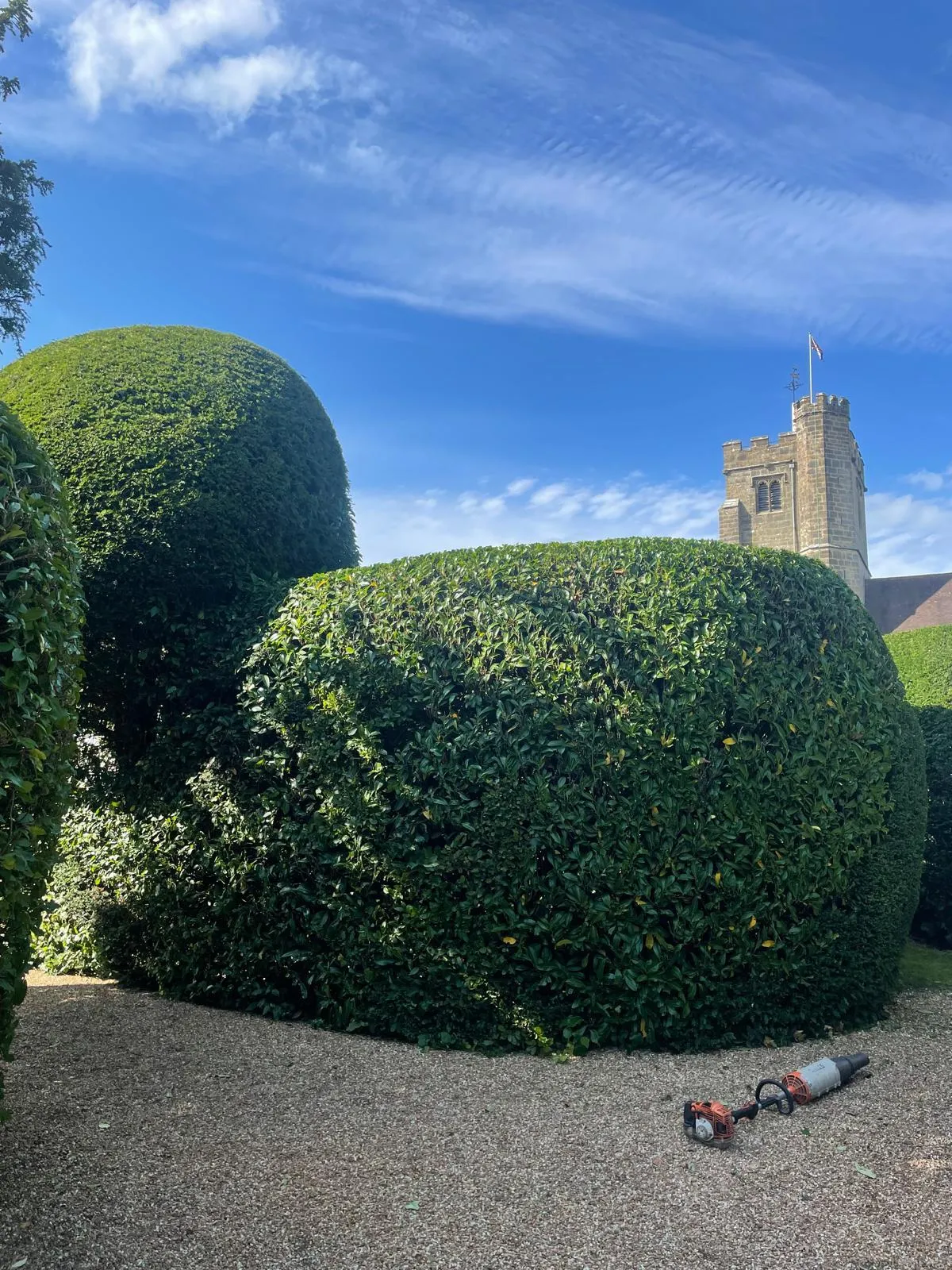
Hedge work splits into two jobs. The first is routine maintenance: a trim once or twice a year to keep a hedge at the size you want it. The second is reduction: bringing an overgrown laurel, leylandii, yew, hornbeam or privet hedge back down in height and width, often after years of no attention.

Maintenance trims are straightforward. Reductions take longer, produce a lot more waste, and need species judgement. Leylandii and conifers don’t reshoot from old wood, so we take them back to where green growth still is. Laurel, hornbeam, yew and beech will reshoot from hard wood and can be cut harder.

When each job is the right call

  • Annual trim. Hedge is at the size you want. You just need it tidied once or twice a year.
  • One-off reduction. Hedge has grown beyond the size you want, often three or four feet above where it started. You want it cut back in height and width so it’s manageable again.
  • Lifting a hedge. A hedge has grown out over the lawn, path or drive, and you want the bottom lifted clear so you can mow, walk or park underneath.
  • Removal. The hedge is past saving, is the wrong species for the spot, or you want a fence instead.

How we do it

  • Nesting-bird check between March and August. Legal duty under the Wildlife and Countryside Act. We check the hedge before the first cut, and if there’s an active nest we wait or work around it. This is non-negotiable.
  • Right kit for the hedge. Long-reach hedgecutter on a tall laurel or leylandii, handheld petrol on domestic hedges, ladders and rope where the machine can’t reach.
  • Species judgement on reductions. Hard-reshoot species (laurel, yew, hornbeam, beech, hawthorn, holly) can be cut harder. Conifers and most leylandii won’t come back from old wood, so we take those down to the point where green remains.
  • Waste chipped on site, cleared on the truck. Hedge reductions produce a lot of arisings. We chip on site and clear the lot.

What it costs

Priced per job after a site visit or a tape-measured WhatsApp photo. Length, height, species, whether it’s a trim or a full reduction, and access all move the number. A regular annual trim on a garden laurel is priced differently to bringing a 12-foot leylandii boundary back to 6 feet. We put a written quote in front of you within two working days.

What we won’t do

We won’t cut a hedge between March and August without checking for nesting birds, and we won’t keep quiet if we find an active nest to save you a week on the timeline. That’s the law and it’s the right thing to do. If the job is urgent and a nest is present, we can sometimes work elsewhere on the hedge line and come back for the rest once the chicks have fledged.

TPOs and conservation areas

Most domestic hedges aren’t individually protected, but a hedge of mature trees in a conservation area, or a hedgerow on a rural boundary, may be covered by Section 211 or the Hedgerows Regulations. We check before we quote, and handle any notices with Hastings Borough Council or Rother District Council on your behalf.

Related work

Have a look at recent tree surgery jobs we've done nearby. If you're not sure which job is yours, the tree surgery hub covers the other options.

Case studies →
More tree surgery services →

Got a tree you're not sure about?

Send a photo on WhatsApp or fill in the quote form and we'll come and have a look. No charge for the visit, no hard sell.