Case study · Hawkhurst
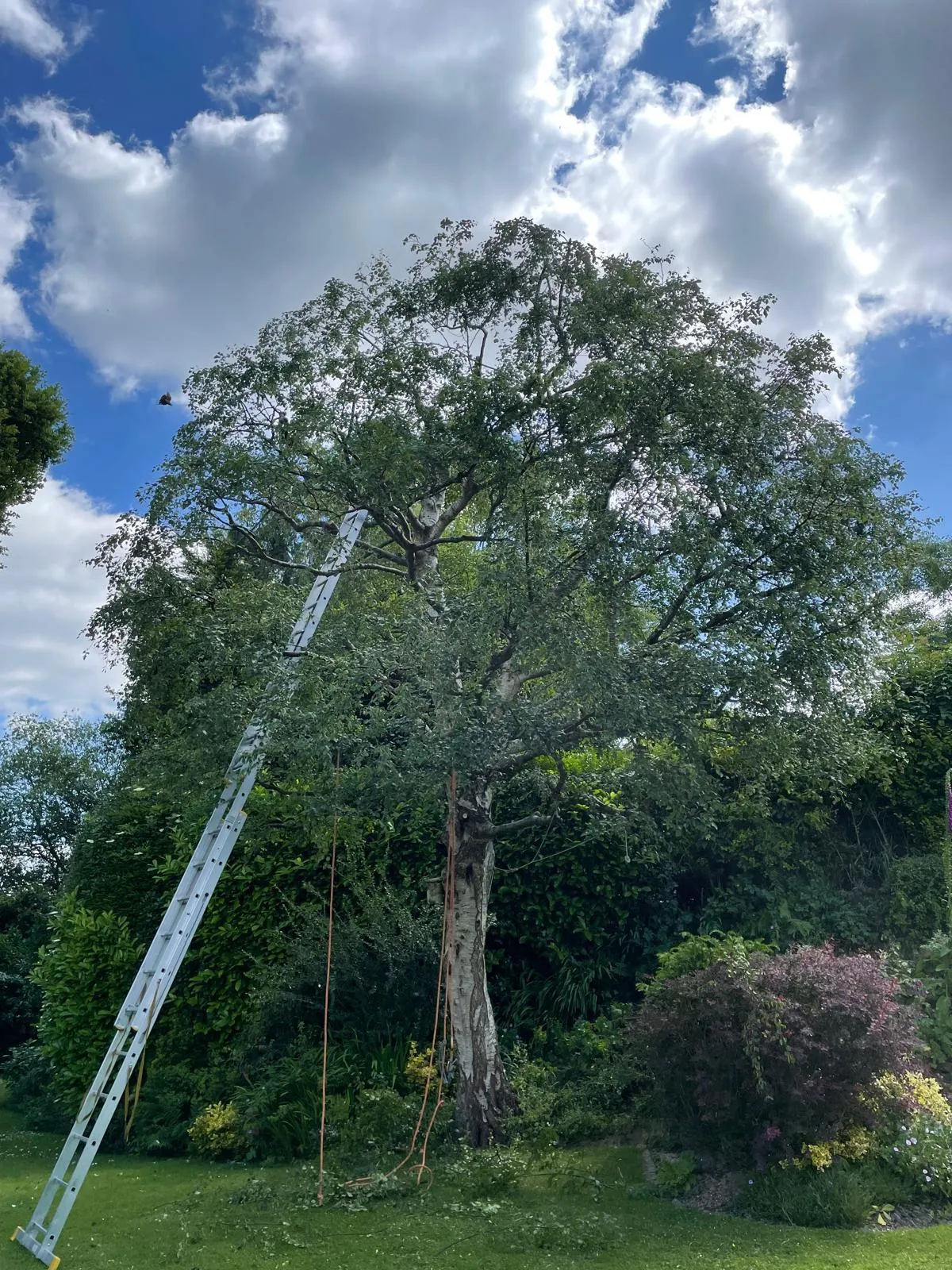
A Silver Birch reduced from ladder, rope and Harness
A semi mature Silver Birch in a back garden, we've trimmed and shaped this before and well, it was that time again.
Read the case studyCrown reduction is the standard answer when a tree is too big for the garden but you'd rather keep it than fell it. We take the height and spread down in small cuts, working to BS3998, so the tree keeps its form and carries on. NPTC qualified, fully insured, TPO and Section 211 paperwork handled for you.
Crown reduction is what we do when a tree has outgrown its spot but you want to keep it. We take the height and spread down in small cuts, working to the natural shape, so the tree keeps its form and carries on. Done properly, it should look like we haven't been there, just a bit tidier and a bit smaller.
A lot of people call this tree lopping or tree trimming. Those are the everyday words, but the proper job is a crown reduction, worked back to a growth point, not the top lopped off at a convenient height.
Done badly, you get a topped tree that grows back angry and costs you twice. A proper reduction works back to a growth point every time, keeping the branch structure intact. Topping is hacking the head off a tree at a convenient height and leaving stubs. They're not the same job, and BS3998 is clear on which is which.
Timing depends on the species. Most reductions are best done in the dormant season, and fruit trees run to their own rules. Not sure when yours wants doing? Check any tree or hedge's window on the tree and hedge care calendar, or read up on when to prune apple trees and when to prune acers and magnolias.
We don't top trees. If someone's told you to top an oak or a lime, ask them whether they're NPTC qualified and what BS3998 says about it. Topping is a near-guaranteed way to shorten a tree's life and double the cost over ten years, and we won't do it. We'll offer a proper crown reduction instead, or we'll explain honestly if felling is the right answer.
If your tree sits in a conservation area and is over 75mm in diameter at 1.5 metres off the ground, you generally need to file a Section 211 notice with the council before any work starts. The council then has six weeks to respond. A TPO'd tree is a separate process and needs a formal application, regardless of the conservation area status. We file the paperwork with your local council on your behalf, with the method, the species and the reason, and we wait the clock out before we put a saw in.
We have gathered publicly available pricing so you can see the range before we visit. Below is what the main UK cost guides publish for crown reduction, and then how we price yours.
Every tree is different, so we quote per tree after a site visit. Species, size, access, waste and whether the tree is TPO'd all change the number. We'll walk the job with you, agree the target reduction, and put a written quote in front of you within two working days.
See how we price every job, across tree surgery and fencing →
★★★★★“We needed to take down a large dead Elm tree and found Josh's details locally. Josh did a fantastic job, no fuss and left the site immaculate. I would absolutely recommend Josh for tree works.”
★★★★★“Josh has helped us over many years with a variety of jobs in our large garden. Mostly he has cut our hedges every autumn. It's a big job over a few days and the result is fantastic. The hedges look great and the topiary too. He is meticulous in everything he does. A couple of times we have needed urgent work done on falling trees and he has responded immediately on the day. I would highly recommend his services.”
Recent tree surgery jobs that involved crown reduction.
A semi mature Silver Birch in a back garden, we've trimmed and shaped this before and well, it was that time again.
Read the case study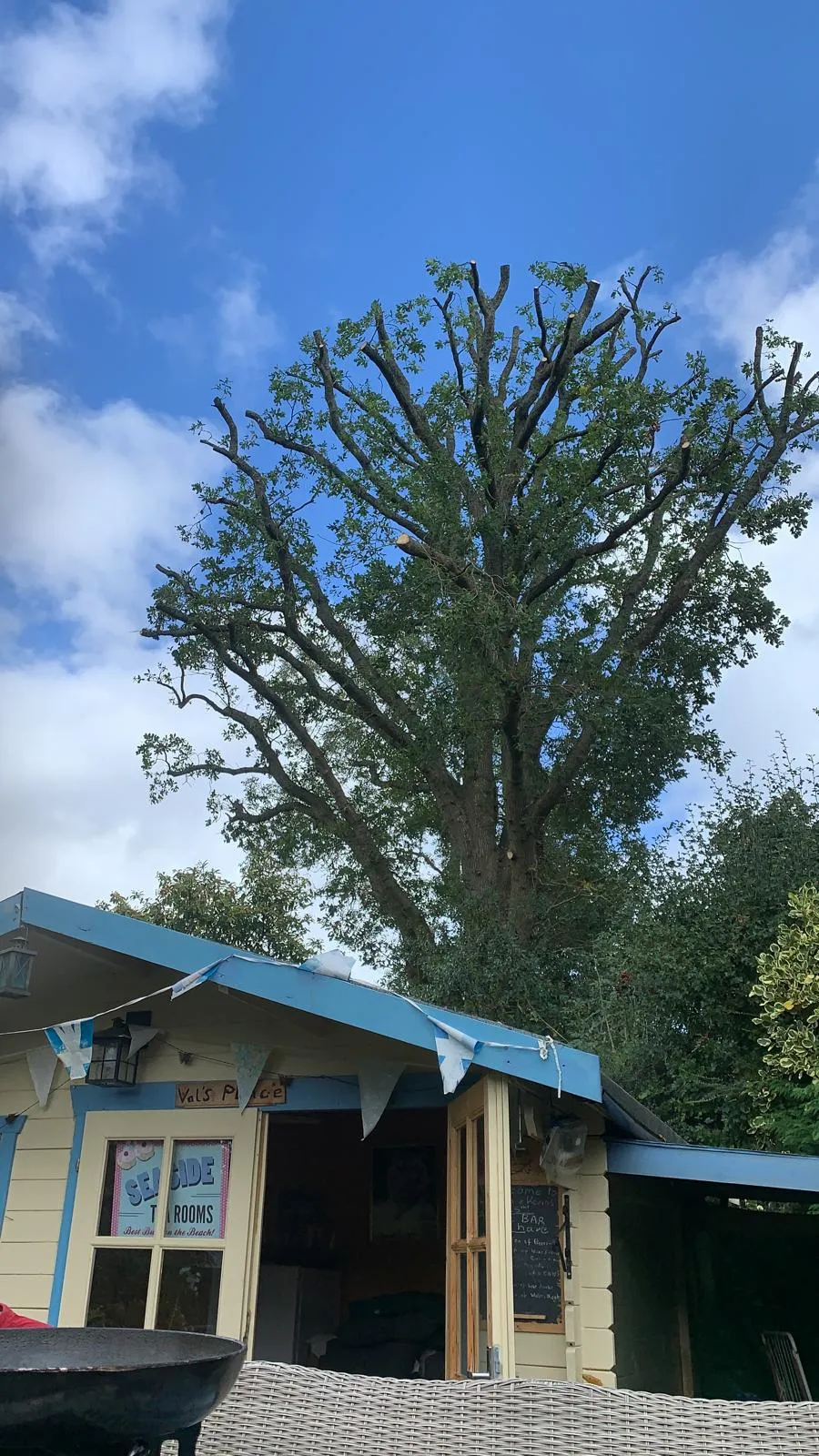
A tall mature oak standing right over the roof of a small seaside tea rooms. The owners wanted weight off the limbs above the building without losing the tree's shape. Reduced and cleaned out, kept the canopy intact, no disruption to trade.
Read the case study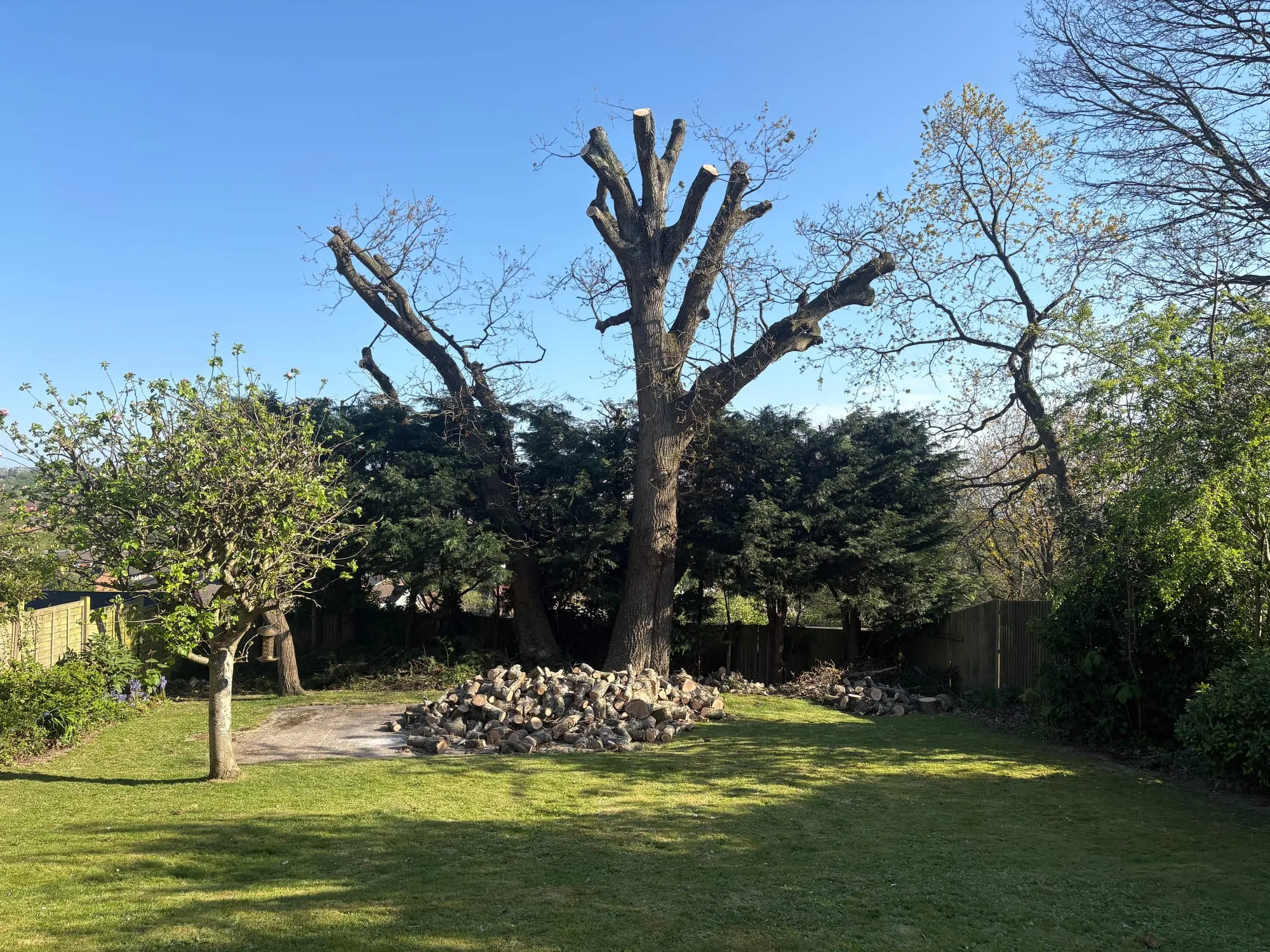
A mature English Oak in decline in a Hastings garden. They'd been told by another firm to fell it. We didn't think that was the answer this time. We reduced the crown right back, took out the dead wood, brought the sail in, and gave the tree another chance. On this occasion the client was happy not to be buying logs for a while.
Read the case studyWe cover about twenty miles around Heathfield, which takes in Hastings, Battle, Bexhill, Rye and the villages between. Each town page has what the ground and the trees are actually like there.
Crown reduction takes height and spread off a tree in small cuts back to a growth point, working to BS3998. The tree keeps its form and carries on. Topping is hacking the head off at a convenient height and leaving stubs. Topped trees grow back angry and cost you twice. We don't top.
Yes. If your tree sits in a conservation area or carries a Tree Preservation Order, we file the Section 211 notice or the TPO application with your local council on your behalf, and wait the six-week clock out before any cuts are made.
BS3998 limits a single reduction to about 30% of the canopy on most species, less on older or stressed trees. Anything more than that and we'd phase the work over two visits across two seasons, to keep the tree in good health.
Most of the year. Between March and August we check for nesting birds before any cuts, and if there's an active nest we'll wait or work around it. Outside that window, anytime.
Because I would be guessing, and a guess helps nobody. A 12 metre beech over a greenhouse is a different job to the same beech over open lawn. I come and look, usually within a few days. Then you get a fixed written quote that does not change.
Often, yes. The lowest numbers in the cost guides usually mean no insurance, no waste disposal, and topping instead of a proper reduction. A reduction to BS3998 keeps the tree healthy and the regrowth manageable.
Everything. The climb, the cuts, chipping the brash, and taking the waste away. The lawn gets raked before we leave. £5m public liability insurance stands behind all of it. If the tree is protected, the TPO paperwork is part of the job.
Fill in the quote form or give us a call and we'll come and have a look. No charge for the visit, no hard sell.