
Case study · Heathfield
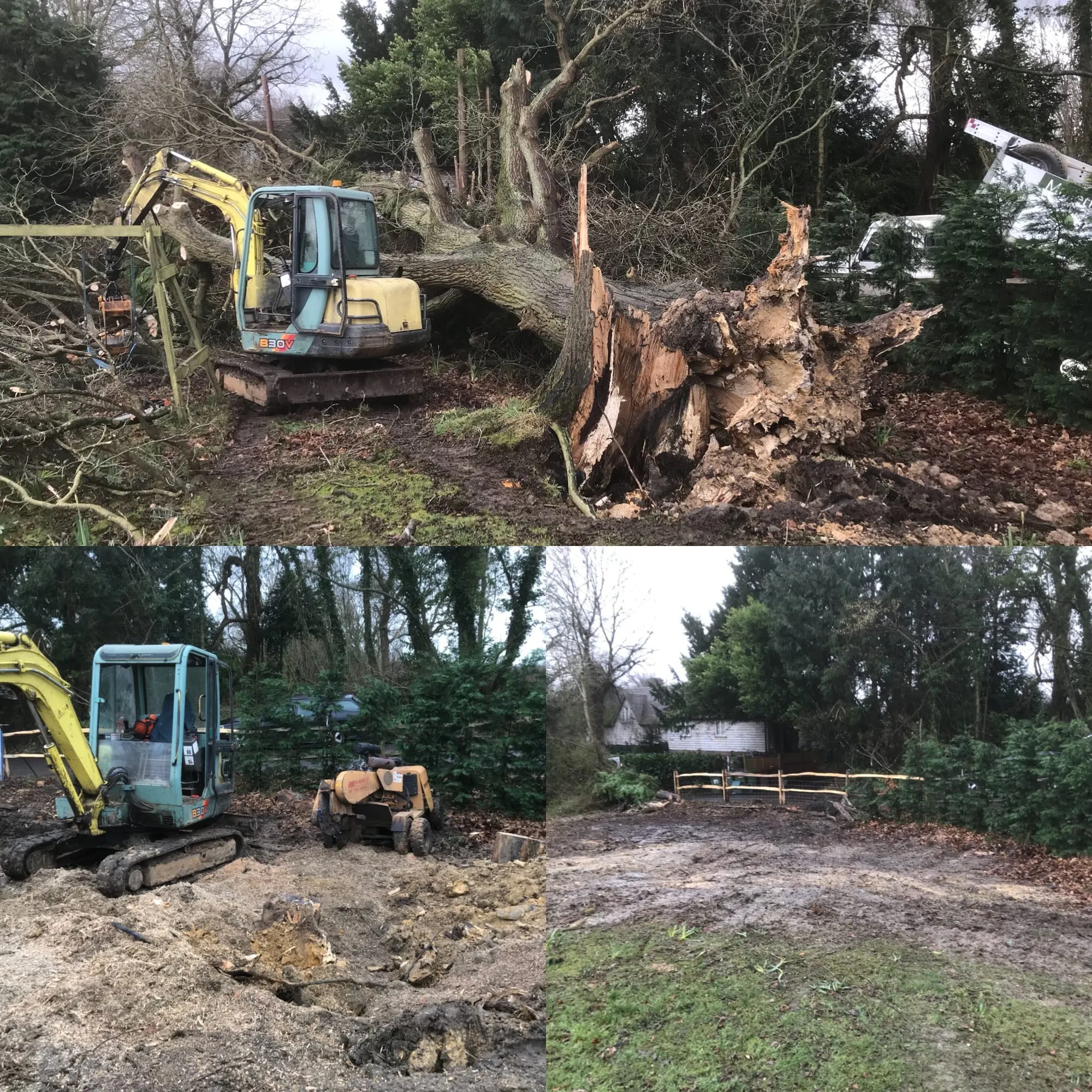
A storm-felled oak cleared off a Heathfield road.
An early morning call to Josh from a regular client, big tree down, part way across the road we need you
Read the case studyPost and rail is the rural boundary fence. Two or three horizontal rails between round or squared posts, no infill, nothing fancy. Chestnut if you want it to last and look the part. Softwood if budget matters more than longevity. Priced in metres, not panels.
A post and rail fence is about as simple as timber boundary fencing gets. Posts driven or dug into the ground, with two or three horizontal rails running between them, mortised and nailed in place. No panels, no boards, no infill. The fence marks a line; it doesn't enclose a view.
You'll see it on paddocks, field boundaries, driveway edges and rural front gardens across East Sussex. It's the right fence for the job where you want a clear boundary without blocking sightlines or the airflow the field needs.
We won't fit softwood post and rail and tell you it's the same as chestnut. It isn't. Softwood has a shorter life in the ground, even pressure-treated, and on a long field boundary the cost of re-doing it in ten years often outweighs the saving now. We'll quote for whichever spec you want, but we'll be straight about the difference.
Priced per metre after a site visit, not per panel, because there aren't any. Number of rails, timber choice (cleft chestnut vs sawn vs softwood), ground conditions, corners and gate positions all move the number. We put a written quote in front of you within two working days.
See how we price every job, across tree surgery and fencing →
★★★★★“Josh did an outstanding job installing a new fence and gate at my house. From the initial quote right through to the finished work, he was professional, reliable, and a real pleasure to deal with. The quality of the workmanship is excellent. I couldn’t recommend Josh more highly if you’re looking for fencing work — he delivers a first-class result.”
★★★★★“Highly recommend Josh for tree surgery and fencing work - he has made a big positive impact to our farm in Kent on the back of his hard work and high standards.”
Recent fencing jobs that involved post and rail.
An early morning call to Josh from a regular client, big tree down, part way across the road we need you
Read the case study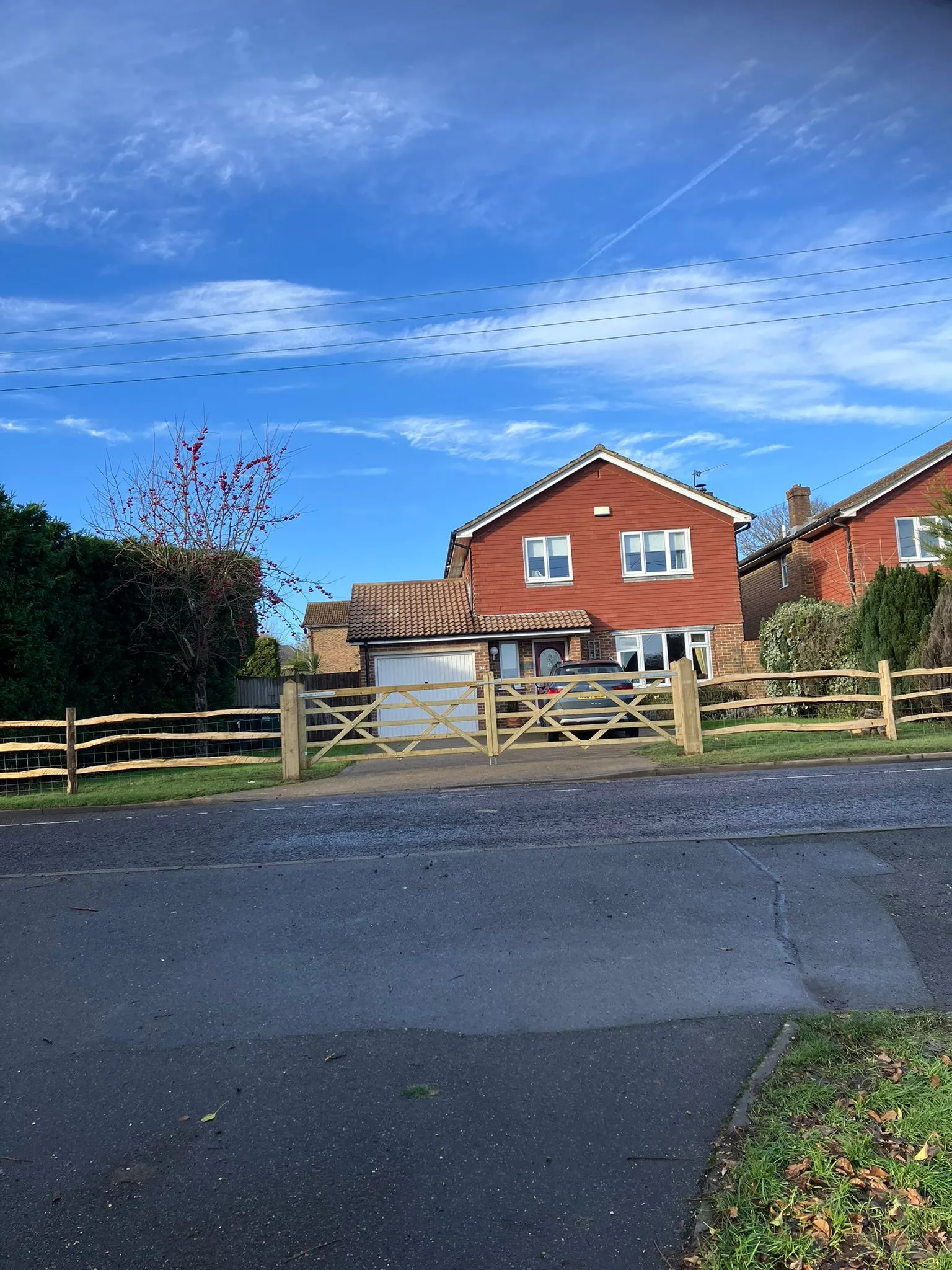
An open front lawn off a main road. The owners wanted a soft boundary and a proper gate without losing the open feel. Three-rail post-and-rail across the frontage with a five-bar gate on the drive entrance.
Read the case study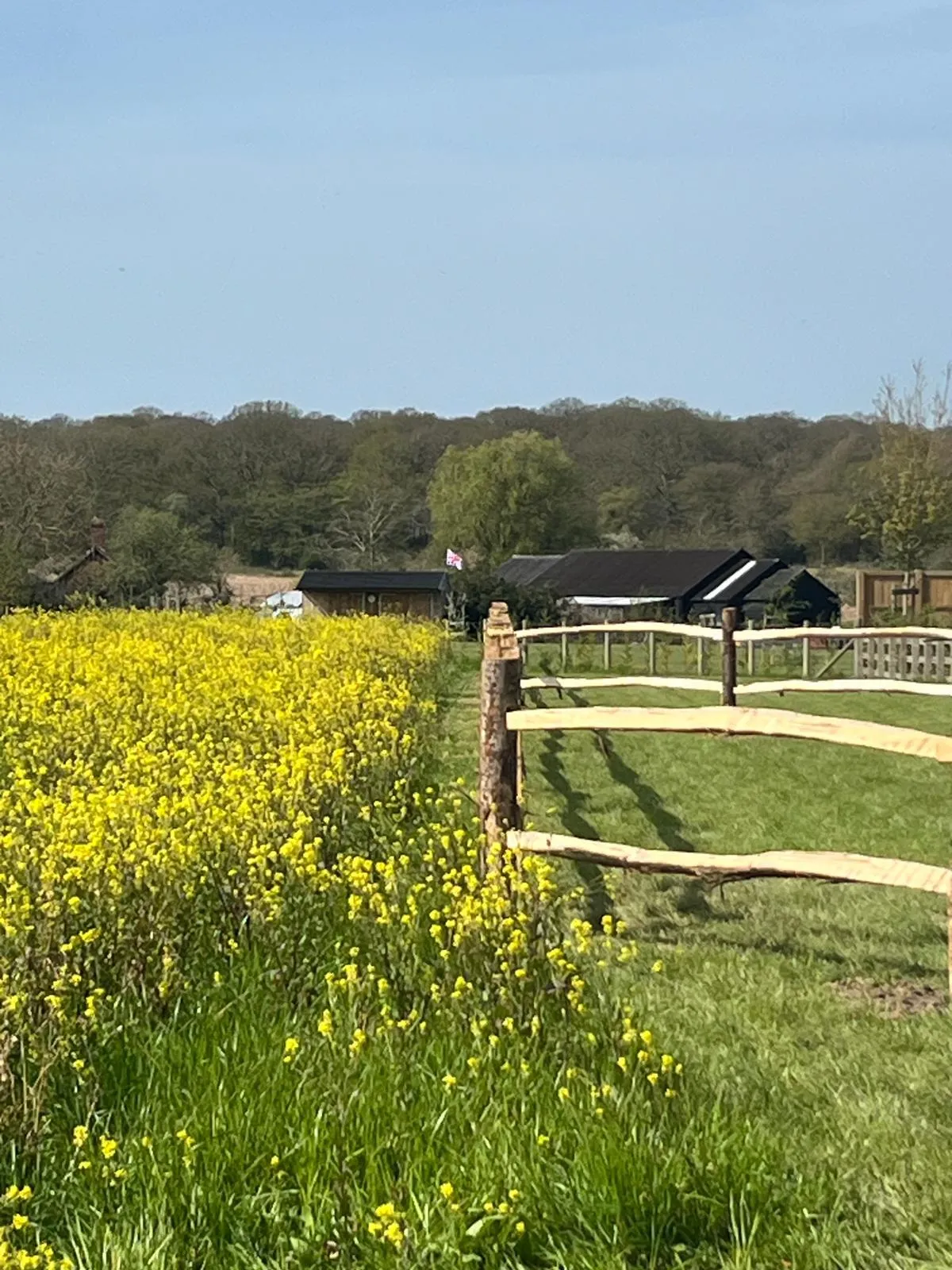
A long cleft post-and-rail run separating a paddock from the rape field next door. Hand-cleft rails, round-section posts, sat low into the slope. Looks like it grew there.
Read the case studyWe cover about twenty miles around Heathfield, which takes in Hastings, Battle, Bexhill, Rye and the villages between. Each town page has what the ground and the trees are actually like there.
Fill in the quote form or give us a call and we'll come and have a look. No charge for the visit, no hard sell.