Crown thinning

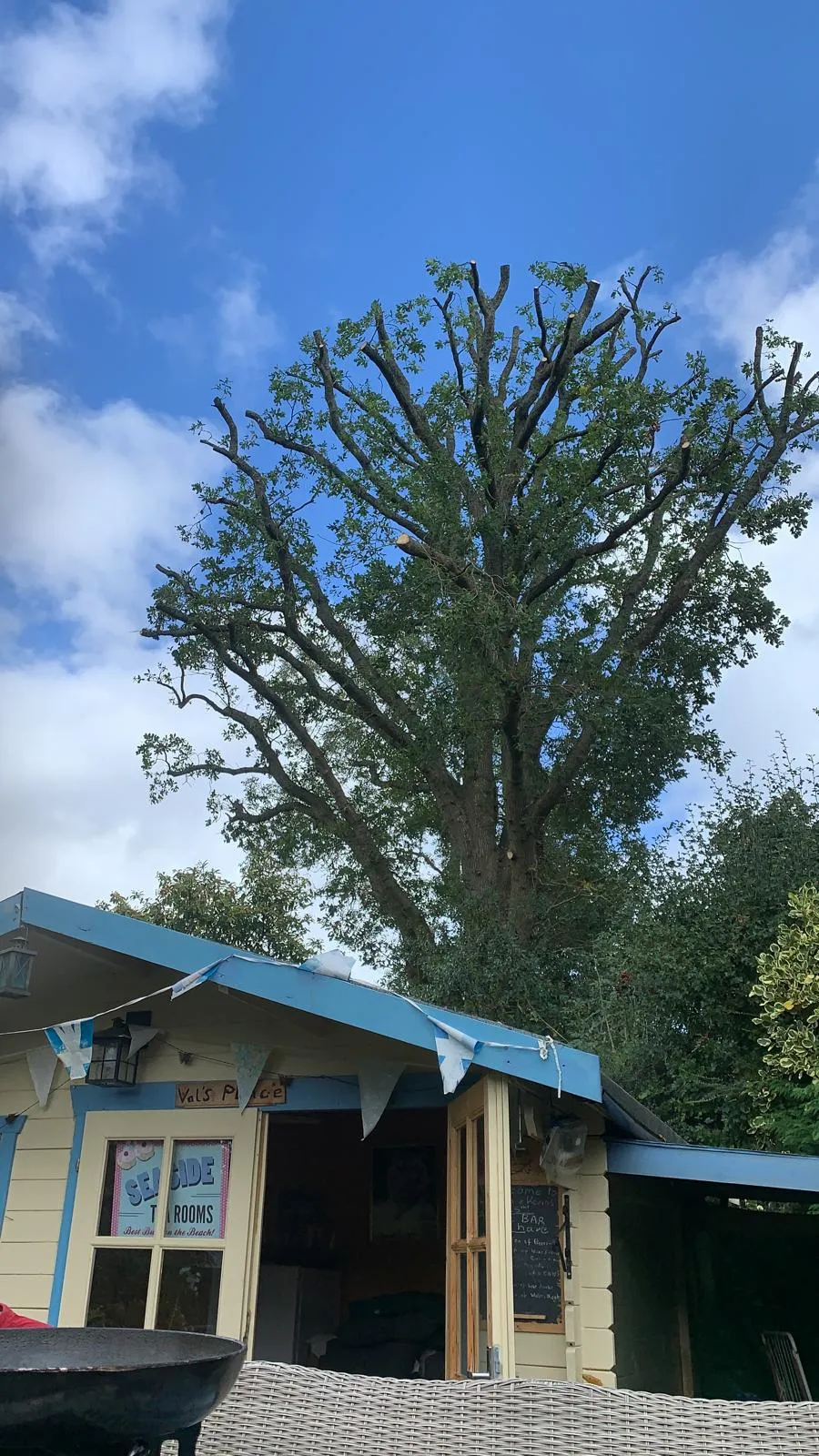
Crown thinning is the quiet one. The tree looks the same size and shape from the lawn, but light gets under it and the wind passes through instead of catching the whole crown like a sail. We work to BS3998, keep the outline, and take out the inner growth that isn't earning its keep.

What it is, and what it isn’t

Crown thinning is the selective removal of secondary branches from inside the canopy, to let more light and wind through without changing the tree’s overall size or shape. A properly thinned tree looks like the same tree, just a bit more open. You can see sky through it where before you saw a dense green wall.

It is not a crown reduction. A reduction takes the height and spread down. A thinning leaves those alone and works inside the canopy. Done well to BS3998, we’d take out no more than about 20 to 25% of the live growth in one go. Any more and the tree responds with a flush of vigorous regrowth that undoes the job within two seasons.

When a thinning is the right call

  • A mature sycamore or ash is casting heavy shade on the lawn and you’d like more light without losing the tree.
  • A dense crown is acting like a sail in the coastal wind off Hastings and you want to take that load off the root plate.
  • The canopy has grown in on itself and crossing branches are rubbing.
  • You like the size and shape of the tree and don’t want to change either, but the garden underneath is struggling.
  • A holm oak or holly has thickened up to the point where nothing grows under it.

How we do it

  • Species and timing. Most broadleaves we’ll thin in late autumn or winter when the leaves are down. Walnuts and birches bleed if cut in spring, so we leave those until later. Evergreens like holm oak we can work year round.
  • Nesting-bird check between March and August. Legal duty. If there’s an active nest, we wait or we work around it.
  • Even, light hand through the canopy, to BS3998. We take out the weaker secondary growth, crossing limbs and deadwood, working evenly so the tree keeps its balance. No lion’s tailing, no pom-poms.
  • Waste chipped on site, cleared on the truck. Logs stacked where you want them, drive blown clear before we leave.

What it costs

We price per tree after a site visit. Species, size, access for the chipper and whether the tree is TPO’d all change the number. Mature oaks and beeches take longer than a young sycamore of the same height because the work inside the crown is finer. We’ll walk the job with you and put a written quote in front of you within two working days.

What we won’t do

We won’t lion’s tail a tree. Stripping all the inner growth out and leaving tufts on the ends of the limbs looks tidy on day one, but the weight sits at the very tips and the limbs snap in the next gale. A proper thinning is even through the crown, not a strip-and-puff.

TPOs and conservation areas

If your tree is in a conservation area and over 75mm in diameter at 1.5 metres, you generally need to file a Section 211 notice with the council before any work starts. The council then has six weeks to respond. A TPO’d tree needs a formal application regardless. We file the paperwork with Hastings Borough Council or Rother District Council on your behalf, with method, species and reason, and we wait the clock out before we put a saw in.

Related work

Have a look at recent tree surgery jobs we've done nearby. If you're not sure which job is yours, the tree surgery hub covers the other options.

Case studies →
More tree surgery services →

Got a tree you're not sure about?

Send a photo on WhatsApp or fill in the quote form and we'll come and have a look. No charge for the visit, no hard sell.