
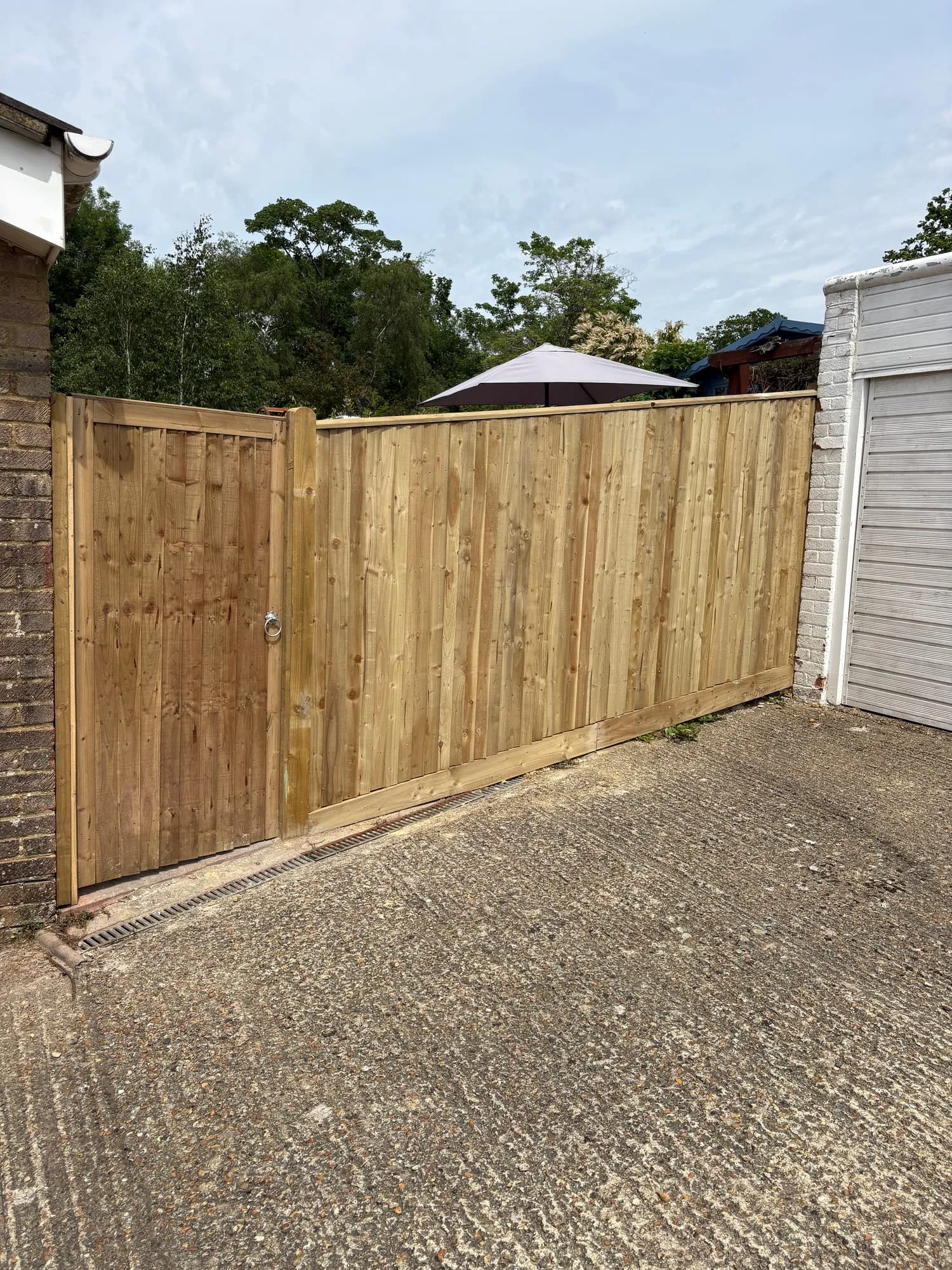
Case study · Heathfield
A low, tired fence replaced with close-board and a gate.
Old fence was tired and too low, new gate installed Old fence cleared and tidy when we left
Read the case studyClose-board is the fence most people actually want when they say "fence panels". Built on site, properly treated posts concreted in, arris rails notched, feather-edge overlapped, capping rail on top. Quality materials only, never just the cheapest.
A close-board fence is the one most people actually want when they say "fence panels". It's built on site, post by post and board by board, with properly treated posts concreted in, arris rails notched in, feather-edge boards overlapped, and a capping rail on top. It's the traditional English garden fence and it's what the good ones down your road almost certainly are, once you look closely.
Put up properly, a close-board fence goes the distance. Put up on a cheap spec, untreated posts, no capping, thin feather-edge, skimped overlap, you'll be looking at it again in five. The timber looks similar on day one. The difference shows up after the second winter.
The other thing worth knowing: close-board is an installation, not a delivery. Nothing arrives ready-made. The whole fence is cut and fixed on your boundary, which is why it can follow a slope or a curve that panels can't, and why the post installation matters more here than on any other kind of garden fence.
We won't put up a cheap spec to win a quote. Cheap posts and panels look the same on day one and give up in about five years. We only fit properly treated, quality timber because that's the fence that lasts. Quality materials only, never just the cheapest. If our number isn't the right one for you, we'll wish you well.
We have gathered publicly available pricing so you can see the range before we visit. Below is what the main UK cost guides publish for close-board fencing, and then how we price yours.
We price close-board per metre after a site visit, because access and ground conditions move the number as much as the fence height does. In the price: treated posts, postcrete, gravel boards, feather-edge, capping rail and all the fixings. What adds cost: slopes that need stepping, removal and disposal of the existing fence, gate integration, and difficult access.
See how we price every job, across tree surgery and fencing →
★★★★★“Josh did an outstanding job installing a new fence and gate at my house. From the initial quote right through to the finished work, he was professional, reliable, and a real pleasure to deal with. The quality of the workmanship is excellent. I couldn’t recommend Josh more highly if you’re looking for fencing work — he delivers a first-class result.”
★★★★★“Highly recommend Josh for tree surgery and fencing work - he has made a big positive impact to our farm in Kent on the back of his hard work and high standards.”
Recent fencing jobs that involved close-board fencing.
Old fence was tired and too low, new gate installed Old fence cleared and tidy when we left
Read the case study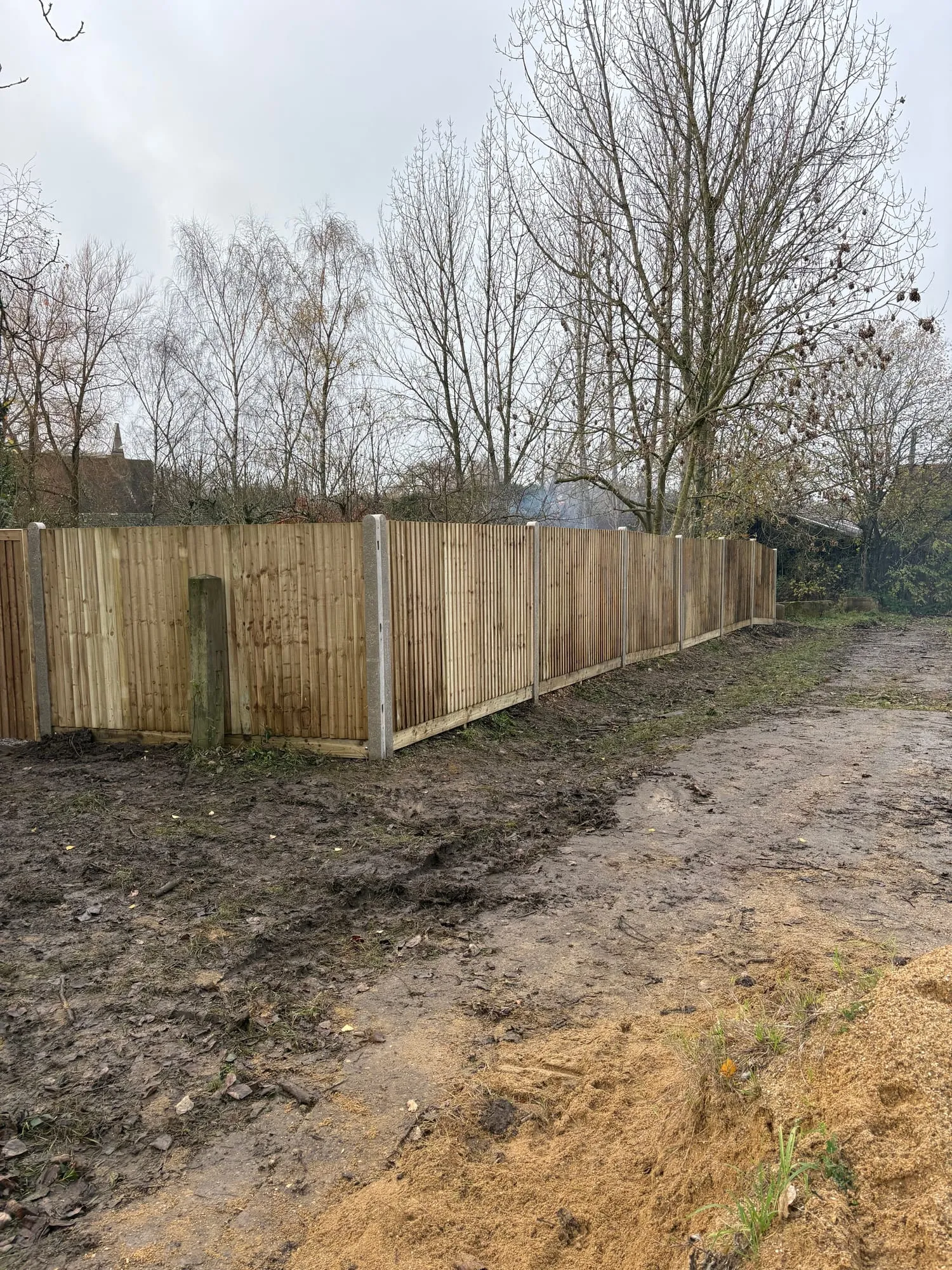
Twenty-seven metres of 6ft close-board on concrete posts, with a pedestrian gate. Concrete posts because they outlast the timber they carry.
Read the case study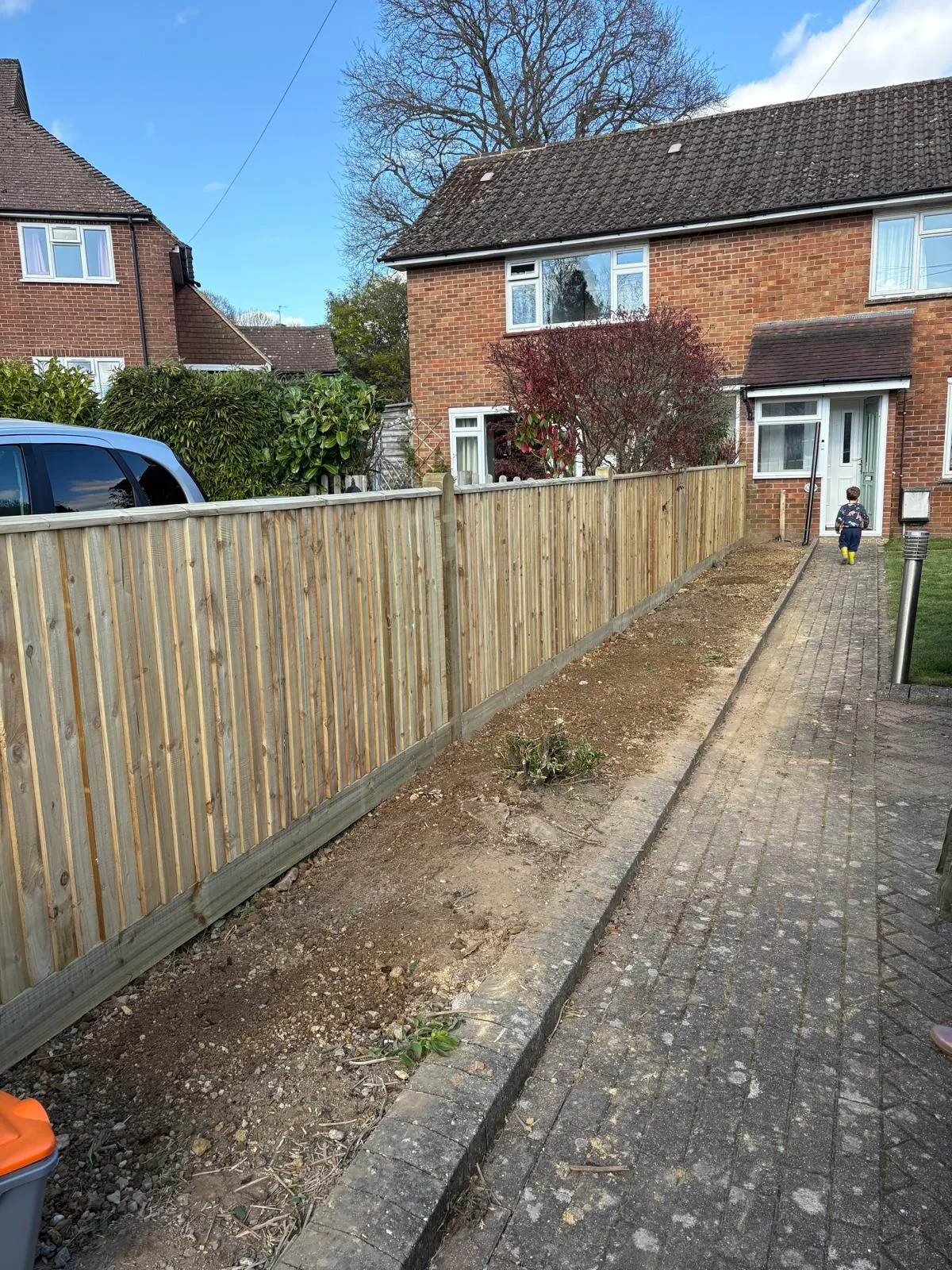
Front fence on the boundary line, old fence leaning into the neighbour's path. Stripped out, posts pulled, a new close-board run set straight on properly treated posts concreted in with gravel boards. No damage to the path or the borders.
Read the case studyWe cover about twenty miles around Heathfield, which takes in Hastings, Battle, Bexhill, Rye and the villages between. Each town page has what the ground and the trees are actually like there.
Because the metre isn't the job. The dig, the old fence coming out, the posts and gravel boards, and how the run holds the wind all move the price. We quote the run we can see, in writing.
Usually. The low quotes tend to mean untreated posts, no gravel boards and panels where boards should be. Close-board built properly costs more on day one and years less over its life.
Everything on the written quote. Old fence out and away, properly treated posts concreted in, gravel boards, the boards themselves, and the site left tidy. No extras appearing on the day.
Fill in the quote form or give us a call and we'll come and have a look. No charge for the visit, no hard sell.