When to prune fruit trees. The winter half and the summer half.
There are two camps. Apples and pears get pruned in winter. Plums, cherries and the rest of the stone fruit get pruned in summer, to dodge silver leaf disease. Get that one rule right and the rest follows.
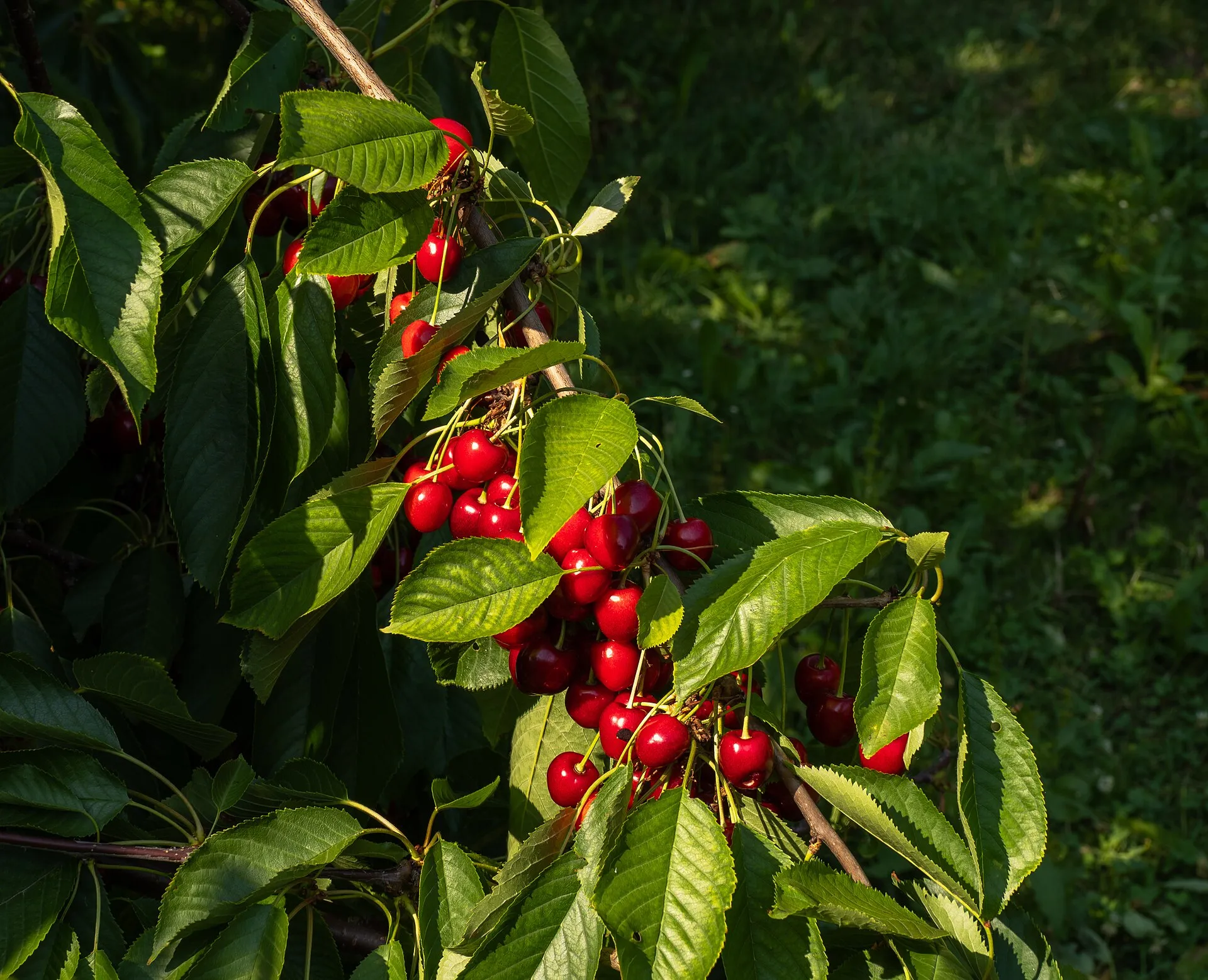
Photo: Ermell , CC BY-SA 4.0
Josh Mullett, JM Tree Surgery & Fencing Services · Josh Mullett, on the one rule that matters mostThere's no single fruit-pruning date. Apples want winter, plums want summer, and getting those two the wrong way round is how good trees die.
The one rule to get right
Fruit trees split into two camps, and the whole thing hinges on knowing which tree is in which.
- Apples and pears (pome fruit): prune in winter. Any time they’re dormant and bare, November to February.
- Plums, cherries, gages, damsons, apricots (stone fruit, the Prunus family): prune in summer. June to August, while they’re in full growth.
That’s the rule. Get it right and your trees stay healthy for decades. Get it the wrong way round and you can lose a good plum to disease in a couple of seasons.
Why the stone fruit insist on summer
The reason has a name: silver leaf disease. It’s a fungus that gets in through fresh pruning wounds, and its spores are about in the cool, damp months, autumn through to early spring. Cut a plum or a cherry in winter and you’re opening wounds at exactly the moment the disease is travelling.
In summer the spores are scarce and the tree heals fast, so a summer cut closes over before anything can get in. That’s the whole logic. There’s no clever exception to chase. If it’s a Prunus, it waits for summer.
Silver leaf shows itself as a silvery sheen on the leaves, usually on one branch first, then more. Cut into an affected limb and you’ll often see a brown stain in the heartwood. By then the move is to cut the limb out, well back into clean wood, in summer, and burn it.
Why apples and pears want winter
Pome fruit doesn’t share that weakness, and it gains from a dormant prune. With the leaves off you can read the branch structure properly and cut to the right place. A winter cut also invigorates the tree, pushing strong new framework and fruiting spurs in spring. The aim is an open goblet: light and air through the middle, nothing crossing or congested.
There’s a dedicated guide on this: when to prune apple trees, pears included.
The exception that catches people out
Trained trees flip the rule for the pome fruit. A cordon, espalier or fan-trained apple or pear gets its main prune in summer (July to August), to keep it restricted and ripen the fruit. So a wall-trained apple and a free-standing plum can end up pruned in the same week, for opposite reasons. Free-standing apple, winter; trained apple, summer; any plum or cherry, summer.
Species by species
- Apple: winter (December to January ideal). Open the centre, take out dead and crossing wood. Blossom April to May, harvest September to October.
- Pear: winter, same as apple. Blossoms a touch earlier, harvest September into October.
- Plum and damson: summer only, June to August. A light prune most years, never in winter. Blossom March to April, fruit August to September.
- Cherry: summer only, June to August, for the same silver leaf reason. Blossom March to April, fruit July to August.
- Gage and apricot: treat as Prunus, summer only.
Every one of these is on the tree and hedge care calendar, where you can pick the tree and see its whole year laid out: prune window, blossom, harvest and planting time.
How much to take, whichever camp
Don’t over-prune in a single go on any fruit tree. A quarter of the crown in a year is plenty on a neglected one, or it answers with a thicket of vertical water shoots that fruit nothing. Renovate an overgrown old tree over two or three seasons, in its right window each time. Cut back to a bud or a side branch, not to a stub, and use the three-cut method on anything heavier than wrist-thick so the bark doesn’t tear.
The short version, if you’re skim-reading
- Apples and pears: winter (November to February), while dormant.
- Plums, cherries, damsons, gages, apricots: summer (June to August), to dodge silver leaf disease.
- Never winter-prune stone fruit. That’s the mistake that kills good trees.
- Trained apples and pears are the exception: they get a summer prune too, to stay restricted.
- Don’t take more than a quarter of any fruit tree’s crown in one year. Renovate overgrown trees over several seasons.
If you’ve got an old or overgrown fruit tree somewhere between Hastings, Battle, Bexhill, Rye and Heathfield and you’d rather hand it to someone, send us a note with a photo. A tree that’s grown into a shed or a boundary is usually a crown reduction job. For the full year across every tree and hedge, use the tree and hedge care calendar.